Reviewing the Funny Cancer Design for Real Embroidery
As a designer who has spent countless hours staring at digitized files and watching needles punch through fabric, I have learned that not every graphic translates well to thread. When I first encountered the Funny Cancer design, my initial reaction was one of cautious curiosity. The title suggests a bold, perhaps irreverent approach to a sensitive topic, which immediately raises questions about execution. Is it tasteful? Is it legible? Most importantly, will it hold up under the mechanical stress of an embroidery machine?
This is not just a theoretical exercise. I recently had a client request a custom tote bag for a support group fundraiser. They wanted something that balanced humor with solidarity, avoiding the overly clinical or somber aesthetics often associated with medical awareness campaigns. This is where Funny Cancer entered my workflow. Before committing to a full production run, I needed to evaluate how this digital asset performs in a real-world embroidery project.
First Impressions and Visual Personality
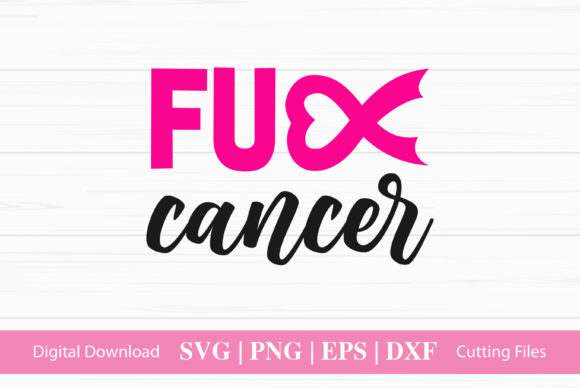
The mood of the Funny Cancer design is distinct. It leans into wit rather than pity, which is a refreshing shift in the landscape of awareness Graphics. Visually, the layout appears clean, but cleanliness in a vector file does not always guarantee clarity in stitch form. The shape and theme suggest a modern aesthetic, likely appealing to a younger demographic or those who prefer subtle advocacy over loud statements.
For Etsy sellers and craft business owners, the visual personality of a design is crucial. It needs to stop the scroll. This design has the potential to do that, provided the digitization respects the original artistic intent. The detail level seems moderate, which is generally good for durability, but I always worry about tiny elements that might get lost in the fill stitch process.
Real-World Application on Various Fabrics
To truly test the viability of this machine embroidery design, I considered several common substrates. For a sweatshirt embroidery project, the design would likely sit well on the chest or sleeve. The thicker fabric provides a stable base, allowing the stitches to pop without sinking into the pile. However, on a lightweight cotton tote bag design, the story changes. Here, the stitch density becomes critical. If the design is too dense, it can cause puckering, ruining the flat surface of the bag.
I also evaluated its potential for baby embroidery. While the message might be intended for adults, the playful nature could work for a parent’s item. However, I would advise against placing it directly on delicate baby skin due to the potential scratchiness of backing and thread. Instead, consider it for a personalized gift like a diaper bag or a parent’s hoodie.
For custom apparel such as caps, the curved surface presents a challenge. Small details in the Funny Cancer graphic might distort if the hoop tension is not perfectly calibrated. In these cases, a simpler version or a larger scale might be necessary to maintain recognition.
Technical Considerations for Stitching
The product description indicates this is a DIGITAL DOWNLOAD containing SVG, PNG, AI, EPS, and DXF files. It is vital to note that these are primarily vector and raster image formats, not native embroidery machine files like PES or DST. This means you, the designer, are responsible for the digitization process unless you are using software that converts these vectors automatically. This is a crucial distinction for digital embroidery file users.
If you are converting these vectors yourself, pay close attention to the satin stitch boundaries. Sharp corners in the AI or SVG file need to be softened in your digitizing software to prevent thread breaks. For the text elements, ensure that the font size remains above the minimum threshold for your machine’s needle eye. Tiny lettering on dark fabric can disappear if the thread colors do not offer sufficient contrast.
Always use the appropriate stabilizer. For stretchy fabrics like jersey knits used in t-shirts, a cut-away stabilizer is non-negotiable to prevent distortion after washing. For woven fabrics like aprons or tea towels, a tear-away might suffice, but test it first. The fabric texture plays a huge role in how the final finished product looks. A rough linen will hide minor imperfections, while a smooth satin will expose every skipped stitch.
Navigating Sensitive Themes in Commercial Work
When selling handmade product items involving health themes, customer trust is paramount. The Funny Cancer design walks a fine line. It can empower buyers who use humor as a coping mechanism, but it may alienate others. As a small shop product, it fits best in niche markets. It is ideal for boutique branding that focuses on resilience and joy.
Before listing this on your store, consider your audience. Does it fit your brand consistency? If your shop usually sells whimsical, light-hearted design assets, this might be a stretch. However, if you specialize in meaningful, conversation-starting pieces, it could be a bestseller. Always check the licensing terms provided with the download. Since this is a set of Crafts oriented files, ensure you have the right to use them for commercial embroidery projects.
Practical Designer Notes for Best Results
- Test on Scrap Fabric: Never run a new design on your final garment. Stitch it out on a similar fabric scrap to check for puckering or thread breaks.
- Check Contrast: View the design in black and white mockups. If the details disappear in grayscale, they will likely get lost in stitching.
- Verify Hoop Size: Ensure the design fits within your available hoop dimensions without excessive resizing, which can distort proportions.
- Inspect Small Details: Zoom in on the vector files. Are there stray points or overlapping paths that could confuse your digitizing software?
- Confirm Licensing: Read the included documentation carefully. Understand if you can sell the physical embroidered item or if there are restrictions on digital redistribution.
In conclusion, the Funny Cancer design offers a unique opportunity for creative expression in the realm of awareness Graphics. It requires careful handling regarding digitization and fabric choice, but with the right technical approach, it can result in a high-value, emotionally resonant embroidered patch or garment. For the experienced maker, it is a worthwhile addition to the library, provided you respect the technical nuances of translating screen pixels into needle punches.