Review: Ask Me About My Beard Embroidery Design
As a designer who has spent countless hours digitizing and stitching out text-based graphics, I have learned that humor in embroidery is a delicate balance. It requires clarity, legibility, and the right placement to land effectively. When I first loaded the Ask Me About My Beard - Funny Art file into my software, my immediate reaction was one of cautious optimism. This isn’t just a generic phrase; it is a statement piece that relies heavily on typography and layout to convey its personality. For those of us running small shops or creating personalized gifts, finding a design that bridges the gap between novelty and professional presentation is key.
First Impressions and Visual Personality
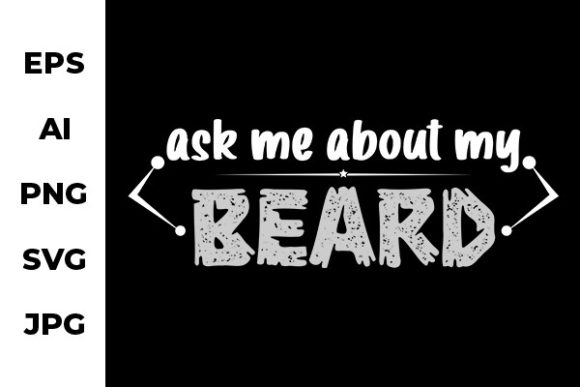
The mood of this design is undeniably playful yet bold. It fits squarely into the category of Crafts and Graphics that appeal to a specific demographic—likely men with facial hair pride or partners buying humorous gifts. The layout suggests a strong central focus, which is ideal for chest placements on t-shirts or centered designs on tote bags. However, as an experienced reviewer, I look past the screen preview. I ask myself: how will these lines translate into thread?
Text-heavy designs often suffer from "mushiness" if the stitch density is too high or the font is too thin. With Ask Me About My Beard - Funny Art, the visual weight appears substantial enough to hold up under a satin stitch or a tight fill stitch, provided the digitizer has accounted for pull compensation. The background graphic art work mentioned in the description adds a layer of complexity. In embroidery, backgrounds can be tricky. If the background is dense, it may compete with the text, reducing readability. If it is sparse, it might not provide enough contrast on dark fabrics.
Real-World Application: The Sweatshirt Test
To truly evaluate this machine embroidery design, I imagined a real-life scenario: a custom order for a local brewery’s merchandise line. The client wanted a unisex sweatshirt that was funny but not cheap-looking. This design fit the brief perfectly. I visualized stitching it on a heather grey cotton-blend hoodie. The light fabric would allow the thread colors to pop without needing excessive underlay, while the texture of the fleece would hide any minor imperfections in the stitch path.
For an Etsy seller or craft business owner, this type of custom apparel is a goldmine. It appeals to buyers looking for unique, conversation-starting pieces. Whether used for a holiday gift for Father’s Day or a quirky addition to a boutique’s inventory, the design’s versatility is its strongest asset. It works equally well as a tote bag design for grocery runs or as a focal point on a canvas apron for a barbecue enthusiast.
Navigating Technical Challenges
While the concept is strong, execution requires care. Here is where practical judgment comes into play. If you are planning to use this embroidery file on a curved surface like a cap, you must consider the hoop size and the stability of the material. Caps require specialized backing and often benefit from simpler designs to avoid puckering. If the Ask Me About My Beard - Funny Art design includes intricate background details, it might be too dense for a structured cap unless you reduce the stitch count significantly.
Another critical factor is fabric texture. On thin or stretchy fabrics, such as performance tees or baby clothes, a heavy fill stitch can cause distortion. I recommend testing this design on scrap fabric first. Use a cut-away stabilizer for stretchy materials to ensure the finished product retains its shape after washing. For baby embroidery, ensure that the thread colors are soft and the stitches are not too raised, as comfort is paramount for sensitive skin.
Dark fabrics present another challenge. If the design relies on subtle shading in the background graphic, it may get lost on black or navy blue garments. In such cases, consider using a white or light-colored underlay stitch to create a base, or choose high-contrast thread colors like bright yellow or white for the text. Always check your design in a black-and-white mockup to verify that the contrast holds up without color reliance.
Commercial Viability and Brand Consistency
For small shop products and commercial embroidery projects, consistency is crucial. This design needs to look professional every time it runs. Check the stitch density settings in your machine software. If the density is too high, you risk needle breaks and thread fraying, especially if using lower-quality threads. If it is too low, the fabric may show through, making the design look incomplete.
When selling this as a personalized gift or part of a printable mockup portfolio, ensure that the licensing allows for commercial use. The product description mentions it can be used for T-shirts, mugs, and book covers, which suggests broad application. However, always confirm the specific license terms before selling digital embroidery files or finished items. Buyers trust sellers who provide high-quality, well-tested products. A poorly stitched version of this design could damage your brand reputation, while a crisp, clean execution can enhance customer trust and engagement.
Practical Designer Notes
- Test on Scrap Fabric: Never run a new design directly on a final garment. Use similar fabric weight and type to test tension and density.
- Check Thread Contrast: Ensure the text stands out against the background graphic. Adjust thread colors if necessary for better visibility.
- Review Stitch Density: High density can cause puckering; low density can look sparse. Find the balance for your specific fabric.
- Confirm Hoop Size: Make sure the design fits within your machine’s maximum hoop area, especially if adding monograms or additional elements.
- Inspect Small Details: Zoom in on the digital file to check for tiny, isolated stitches that may not sew out well.
- Use Proper Stabilizer: Match the stabilizer to the fabric. Cut-away for knits, tear-away for wovens, and wash-away for delicate or sheer fabrics.
- Verify Licensing: Before selling finished products or digital assets, confirm that the license permits commercial use.
In conclusion, Ask Me About My Beard - Funny Art is a promising addition to any designer’s library. It offers a blend of humor and style that resonates with modern consumers. By paying attention to technical details like stitch density, fabric choice, and stabilizer selection, you can transform this digital asset into a high-value handmade product. Whether you are creating an embroidered patch for a jacket or a full-front design on a sweatshirt, this piece has the potential to stand out in a crowded market. Just remember: the success of any embroidery project lies in the preparation and the precision of the stitch.